


Pokémon GO
3.5997.40K Reviews
App Specs
- Version
- 0.433.1
- Updated On
- License
- Free
- Downloads
- 500,000,000+
- Developer
- Niantic, Inc.
- Categories
- Adventure
- Platform
- Android, iOS
Screenshots





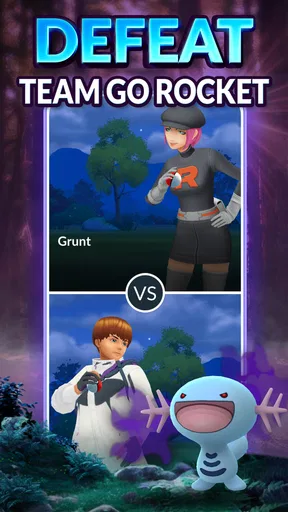
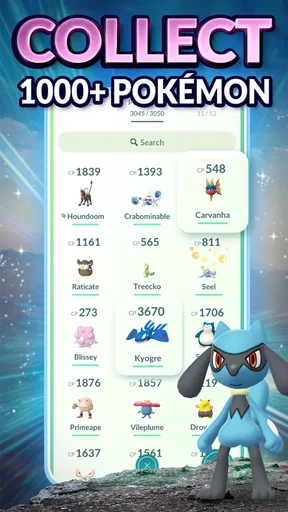
 Analysis by AppCompare
I judge Pokémon GO by the way it turns an ordinary walk into a small game plan: open the app, look around, decide what to do, and see what the streets offer. It is an adventure game from Niantic, Inc., released in 2016 and still familiar to a huge audience, with more than 500 million installs. That reach makes sense, but it does not mean the game suits every routine. Its best moments come when you already have somewhere to go and let the game add a playful reason to take the longer route.
Starting with one simple action
The first useful choice is not which Pokémon to chase; it is where and when to play. I get more from a short outing when I pick a familiar route with safe places to stop, rather than staring at my phone while wandering without a plan. The map makes the real world part of the activity, and a Pokémon appearing nearby gives that walk a clear next step. Catching one is quick: aim and flick a Poké Ball, then decide whether to keep moving or stay a little longer.
That simple action is also the game’s main trade-off. Unlike a conventional adventure that can be played from a sofa, this one asks you to move through real places. A nearby park, a walk between errands, or a break outside can make a natural session; a long commute in a car or a day spent indoors cannot offer the same experience. I would not recommend treating the map as a reason to enter private property, take risks, or ignore traffic. The game works best when it fits safely around a journey you were already making.
Guides and Analysis on Pokémon GO
How the feedback keeps a walk moving
Pokémon GO gives a steady sequence of small prompts. A creature appears, a PokéStop offers a reason to pause, and a Gym or raid can turn a quick check-in into a longer activity. That rhythm is easy to understand even if you are new to the series: act, see the result, collect something or meet a challenge, then choose the next move. It makes the game approachable, though the repeated catching can feel routine if you want a tightly written story or a single clear campaign to finish.
I find it helps to decide what counts as a successful outing before opening the app. On a busy day, catching whatever appears along the way may be enough. When I have more time, I can make a PokéStop or a Gym the destination, or coordinate a raid with friends. This small change keeps the game from becoming an endless checklist. It also makes a short session feel complete instead of leaving me with the impression that I should keep walking just because something else might appear.
Rewards, friends, and the reason to return
The reward is not only a collection of Pokémon. Stops provide items, Gyms offer battles, and raids give friends a shared goal. The built-in friends list and trading make the experience less solitary, especially when people can arrange to meet rather than hope to bump into one another. In my view, that is where the game feels most distinct from a standard location-based walking app: the route is not just a route, because it can lead to a catch, a useful stop, or a cooperative challenge.
There is a practical wrinkle: the social side is more rewarding when friends are available and willing to play at compatible times. If I am on my own, the basic loop still works, but a raid may not be as appealing as a casual walk and a few catches. I would treat group activities as a bonus rather than the only reason to install the game. For someone who wants solo play with a fixed plot and dependable progress, a traditional adventure game is a better fit; for someone who likes shared goals tied to real places, this has a different kind of pull.
Worth Reading Before You Choose

Flipboard Shows What News Apps Must Do Beyond the Feed

Switching to Android Auto Means Rethinking Your Driving Routine

Google Calendar Makes a Crowded Week Easier to Manage

Ludo King Makes the Most of the Minutes Between Plans

Baby Panda World Brings Quick Play to Modern Phones, but Its Game Library Feels Busy

ESPN’s Live Game View Makes Following Close Games Easier
What to expect from the app
The bright, friendly presentation makes Pokémon easy to recognize, and augmented reality can place one in the scene through the phone’s camera. I enjoy that as a novelty, but I do not leave it on for every catch: it can use more battery, while the ordinary screen keeps the action quicker. A portable charger is sensible for a long day out, and it is worth keeping the phone away when crossing streets or moving through unfamiliar areas. Those are not reasons to avoid the game; they are part of deciding when to look at the screen and when to put it away.
It is free to download and rated for Everyone, so trying it does not require an upfront purchase. Optional in-app purchases range from $0.99 to $99.99 per item, which is a broad span; I would set a spending limit before browsing them, especially if the collection loop is compelling. Its current version is 0.391.1, and it requires Android 9 or later on Android. The average rating is 3.9 from around 15 million ratings, with roughly 996,000 reviews. Those figures suggest a long-running game with plenty of players, but the right test is whether its location-based routine fits your own day.
Catch 'Em All in the Real World
Imagine walking through your local park and suddenly, a wild Pikachu appears. With Pokémon GO, that’s exactly what happens. The game uses augmented reality to superimpose pokémon onto real-world locations. It’s like a virtual scavenger hunt that encourages you to explore your surroundings. Honestly, it’s a clever way to make exercise fun, even for those of us who are more inclined to stay indoors.
Gameplay Mechanics
The mechanics are pretty straightforward. You walk around, your phone’s GPS tracks your location, and pokémon pop up on your screen. To catch them, you simply flick a pokéball at them. But it’s not just about catching pokémon. You can also visit PokéStops to collect items, battle at gyms, and even team up with friends for raids. There’s always something to do, and the game regularly updates with new events and challenges to keep things fresh.
Community and Social Features
One of the coolest aspects of Pokémon GO is its community. You’ll often find groups of people gathering at popular PokéStops or working together to take down a raid boss. The game has a built-in friends list and allows you to trade pokémon, which adds a social layer to the experience. It’s a great way to meet new people who share your enthusiasm for pokémon.
Visuals and Design
The game is visually appealing, with cute and colorful graphics that bring the pokémon to life. The augmented reality feature is particularly impressive, allowing you to see pokémon in your actual environment. However, the AR mode does drain your battery faster, so you might want to keep a portable charger handy.
Niantic, the game’s developer, has done a stellar job in keeping the game visually engaging while also optimizing it for a wide range of devices. So, whether you’re using a high-end phone or a more budget-friendly option, Pokémon GO runs smoothly.
Things to Consider
While the game is a blast, it’s important to be cautious while playing. Paying attention to your surroundings is crucial, especially when crossing streets or exploring unfamiliar areas. Also, keep an eye on your data usage; the game can be a bit of a data hog if you’re playing frequently.
That said, Pokémon GO offers a unique blend of gaming and real-world exploration that’s hard to beat. It’s a fun way to get some exercise, make new friends, and, of course, catch some pokémon. If you haven’t tried it yet, you’re missing out on a truly unique experience. So, grab your phone, lace up your shoes, and get ready to embark on your very own pokémon journey!
A realistic routine, without turning every walk into a mission
A good everyday use case is a walk to a café or a local shop. I can check the map before leaving, keep the phone away while moving, and take a brief look only when I reach a safe place to stop. If something interesting appears, I can decide whether it is worth a detour; if not, the walk still has its original purpose. This is a more sustainable way to play than planning every trip around the game, and it avoids making a pleasant outing feel like unpaid work.
For families or friends, the game can give people a shared reason to explore a park, but I would agree on simple boundaries first: stay together, stop before interacting with the screen, and let the least experienced player set the pace. A newcomer does not need to understand every feature at once. Start with catching and nearby stops, then try battles or raids only when those sound fun. That gradual approach keeps the first session from becoming a scramble through menus and unfamiliar terms.
Small choices that improve the session
One useful habit is to separate walking time from screen time. I check the game while standing still, make a quick choice, then put the phone away as I move. This matters more than chasing an ideal route: the game’s central appeal is that real surroundings become part of play, and they deserve attention too. If a location feels uncomfortable, crowded, poorly lit, or simply inconvenient, I skip it. No virtual reward is worth ignoring a sensible boundary.
I also avoid treating every catch as equally important. A short session can have one modest aim—collect items at a stop, look for a particular kind of encounter, or join a friend for a raid—rather than trying to do everything. That choice makes the reward clearer and gives me a natural stopping point. When time is tight, I can finish after a few minutes; when I have company and a safe place to linger, the same loop can stretch into a more social outing.
Compared with a standard mobile adventure, this game has less control over where the action happens and when a worthwhile opportunity appears. A story-driven game is usually better for a planned, uninterrupted session at home, while a location-based walking game is better when I want a reason to explore outside. Compared with a basic step counter, Pokémon GO gives the walk playful objectives and collection, but it also asks for more attention to the screen and can use more battery. The right choice depends on whether you want your movement to support a game or simply want a game that is easy to play anywhere.
Who will enjoy it—and who may not
I would recommend it to Pokémon fans who like collecting, to people who enjoy low-pressure outdoor routines, and to friends who can make occasional meetups part of the fun. It is also a reasonable choice for someone who wants to turn a familiar walk into something more engaging without committing to a long gaming session. The broad appeal is reflected in its 3.9 average rating, though ratings cannot tell you whether your own neighborhood and schedule make the loop enjoyable.
I would skip it if you want a self-contained adventure that works equally well in any room, dislike location-based play, or need a game with a clear ending. It may also be a poor match if you find repeated collection tasks tiring or do not want optional purchases in a free-to-start game. You can enjoy the basic idea without spending, but I would not assume that buying items is necessary to make the experience worthwhile. Try the ordinary walk-and-catch rhythm first, then decide whether the extra layers suit you.
Battery, data, and practical expectations
People often wonder whether they need augmented reality for the main appeal. I do not think so: it is a fun visual extra, but the game’s core works through the map and catch interaction, so switching away from the camera can be a sensible choice when battery life matters. Carrying a power bank helps on longer outings, but the simplest saving is to keep sessions short and avoid leaving the game open when you are not playing.
Data use is another reasonable concern, especially if you play often away from home. I would check my mobile plan and watch usage during the first few outings rather than assume it will be negligible or excessive for everyone. The amount can depend on how and how long you play. Likewise, performance varies by device and conditions, so I would not promise that every phone will feel identical. The game is listed for Android 9 and newer; iPhone users should check compatibility in their own store before installing.
The game is free to start, but the listed purchase range—from $0.99 to $99.99 per item—makes restraint worthwhile. I would decide in advance whether I am comfortable spending at all, and avoid buying something just because a session feels slow. The enjoyable part for me is the loop of walking, noticing, catching, and choosing a next stop; spending should remain optional rather than become the reason to keep playing.
Why another session begins
The loop works because it has a clean reset. I take an action by walking or choosing a nearby activity; the screen gives immediate feedback through an encounter, a stop, or a battle; I receive a catch, items, or a shared moment; then I close the app and return to my day. Later, a different route or a friend’s invitation supplies a fresh reason to open it again. That cycle can be satisfying in small doses, but it can also become repetitive if I expect every outing to feel new.
For me, the strongest recommendation is conditional: install it if you want a game that makes familiar outdoor places feel a little more playful and you are happy to keep safety, battery, and spending in mind. Choose a conventional mobile adventure if you want a controlled story, or a simpler walking tool if tracking activity matters more than collecting Pokémon. Niantic’s game has a distinctive rhythm, and when that rhythm matches your life, even an ordinary route can become a worthwhile little adventure.
Pros
- Engages users with real-world exploration.
- Promotes physical activity through gameplay.
- Regular updates keep content fresh.
- Strong community events and gatherings.
- Augmented reality enhances immersion.
Cons
- Drains battery quickly during gameplay.
- Requires constant internet connection.
- Limited gameplay in rural areas.
- In-app purchases can be costly.
- Occasional GPS and server issues.
FAQs for Pokémon GO
What devices are compatible with Pokémon GO?
Pokémon GO is compatible with both Android and iOS devices. For Android, it requires Android 6.0 or above, with at least 2 GB of RAM. For iOS, it supports devices running iOS 12 or later. Ensure your device has GPS and a stable internet connection for the best experience.
Is Pokémon GO free to play?
Yes, Pokémon GO is free to download and play. However, it offers in-app purchases that allow you to buy items such as Poké Balls, Incense, and Raid Passes. These can enhance your gameplay experience, but they are not necessary to enjoy the game fully.
How do I ensure my safety while playing Pokémon GO?
Always be aware of your surroundings while playing Pokémon GO. Avoid playing in dangerous areas, and never trespass on private property. It’s advisable to play in well-lit, safe environments, and consider playing with friends or family for added safety and enjoyment.
Can I play Pokémon GO offline?
No, Pokémon GO requires an active internet connection to play. It uses your device’s GPS to track your location in real-time and connect with game servers. Ensure you have a stable Wi-Fi or mobile data connection to enjoy uninterrupted gameplay.
What is the objective of Pokémon GO?
The main objective of Pokémon GO is to explore your surroundings to catch Pokémon. Players can also battle in Gyms, participate in raids, and complete special research tasks. The game encourages physical activity and discovery, with an ever-expanding roster of Pokémon to catch.


